
Flat Roofing Systems — Certified Roofers
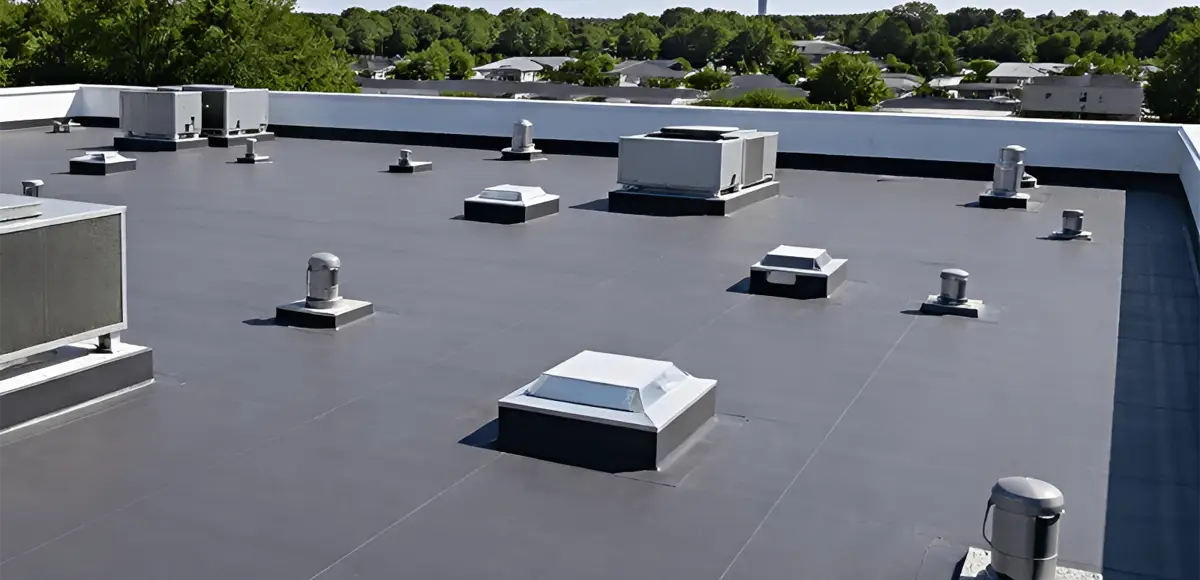
Protect your property with durable, weather-resistant flat roofing systems designed and installed by Certified Roofers. Whether you’re managing a commercial facility, multifamily housing complex, or industrial warehouse, our team provides high-performance flat roof solutions tailored to the unique climate needs of Florida and Tennessee.
We proudly serve businesses in Kissimmee, FL, Brentwood, TN, and surrounding regions with proven systems that reduce energy costs, minimize leaks, and extend the life of your building envelope. Learn more about our commercial roofing services and how we can help protect your investment.
What Are Flat Roofing Systems?
Flat roofing systems feature a low slope, generally under 10 degrees, making them ideal for large buildings. These roofs offer easy access for maintenance, equipment installation (like HVAC), and cost-effective installation over large surface areas.
They are commonly used in:
- Warehouses and Distribution Centers
- Schools and Government Buildings
- Retail and Hospitality Chains
- Multifamily Apartments and Condominiums
Our systems are designed for performance in high-sun, high-humidity regions like Florida and freeze-thaw conditions common in Tennessee. Explore our flat roof coating options to further enhance durability.
Brands We Work With






Types of Flat Roof Systems We Install
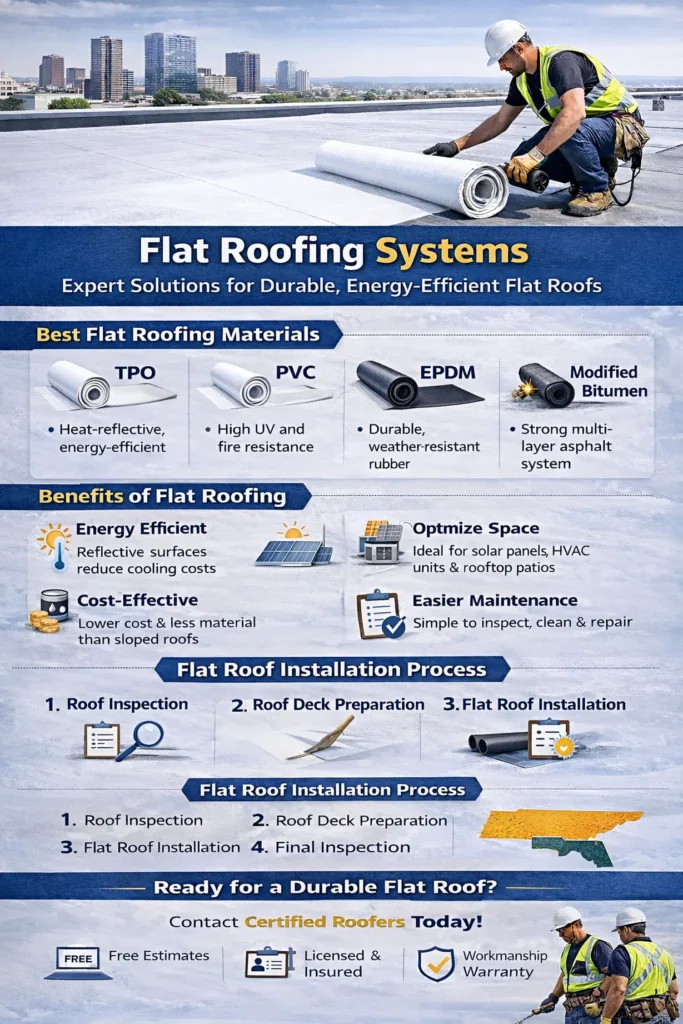
Built-up roofs consist of multiple layers of bitumen and reinforcing fabrics. BUR systems are known for their excellent waterproofing and fire resistance, making them a long-standing choice for commercial buildings.
Modified bitumen offers improved flexibility and weather resistance. It consists of asphalt-based sheets rolled onto the roof using heat or adhesives. It’s a great option for buildings that need enhanced impact resistance or have high foot traffic.
TPO is a single-ply membrane known for its energy efficiency. The reflective white surface deflects UV rays, helping reduce cooling costs by up to 30%. It’s a leading choice for buildings in sunny climates like Florida.
EPDM is a synthetic rubber membrane that performs well in cold weather. Its durability and flexibility make it a great choice for flat roofs in Tennessee that face snow and freeze cycles.
PVC is a premium, chemical-resistant membrane often used in restaurants and manufacturing facilities. It’s lightweight, energy-efficient, and fire-retardant, offering long-term performance with low maintenance.
SPF is a seamless, insulation-enhanced solution sprayed directly onto the roof. It fills gaps and irregular shapes, making it highly efficient at sealing and insulating buildings.
Why Flat Roofing Systems Are Ideal
- Cost-Effective: Flat roofs use fewer materials and are faster to install, reducing labor and overall costs. This makes them highly appealing for budget-conscious commercial and industrial properties.
- Easier Maintenance: The accessible surface allows for safer and simpler inspection and repair. HVAC and solar panel installations are also easier and safer on flat surfaces.
- Energy Efficient: Reflective membranes like TPO and PVC help reduce energy bills. This is especially crucial in hot climates, where cooling expenses can skyrocket.
- Multipurpose Surface: Flat roofs can host HVAC units, solar panels, or even rooftop gardens. This creates additional usable space for utility, sustainability, or aesthetics.
- High ROI: A well-installed flat roof lasts 20–30 years with proper maintenance, offering excellent value. Many systems are eligible for tax incentives or energy rebates.
Flat Roofing Challenges We Solve
Drainage & Ponding
Flat roofs must be expertly designed to prevent standing water. We install tapered insulation and internal drains to manage runoff efficiently.
Thermal Expansion
Tennessee roofs experience wide temperature swings. We use flexible membranes and secure flashing details to accommodate thermal movement.
UV Exposure
In Florida, flat roofs endure strong sun exposure. We recommend UV-stable materials like TPO and elastomeric coatings to protect against degradation.
Flat Roof Installation Process
- On-Site Evaluation: We begin with a detailed roof inspection and moisture analysis to determine the best system for your building. Our roof inspection service identifies issues early to save you time and money.
- Removal or Preparation: Old membranes may be removed or re-covered, depending on code and existing conditions. We repair substrate damage as needed for optimal installation.
- Installation: Your selected membrane is installed with attention to seams, flashings, drains, and edge details to ensure long-term watertightness.
- Final Inspection: We conduct a quality check, including adhesion testing, thermal imaging, and warranty registration.
Looking to reduce downtime? Our roofing project management ensures timely, clean, and professional execution.
Florida vs. Tennessee Flat Roof Needs
Florida Flat Roofs
With 150+ days of sun annually and hurricane risk, roofs must resist UV rays and high winds. TPO and reinforced PVC systems are ideal, and coatings improve solar reflectivity. According to IBISWorld, the Florida roofing market exceeds $6.7B in annual revenue.
Tennessee Flat Roofs
Tennessee’s variable climate demands roofs that resist hail, snow, and freeze-thaw stress. EPDM and modified bitumen systems provide excellent flexibility and resistance to thermal cycling.
Flat Roofing Maintenance & Repair
Our services include:
- Annual Inspections for drainage, seams, and membrane integrity. Routine checks reduce long-term repair costs.
- Spot Repairs with compatible materials. Our roof repair services are prompt and precise.
- Re-coating to extend roof life. Pair it with our commercial roof coatings for enhanced protection.
- Storm Damage Restoration — emergency tarping and insurance claim assistance available.
Why Choose Certified Roofers
- Licensed in FL & TN for Commercial Work: We meet all regional codes and compliance standards, ensuring your flat roof system is legally sound and safely installed by professionals.
- Over 15 Years of Experience in Flat Roof Systems: Our team brings deep expertise, having installed and repaired hundreds of flat roof systems across various industries and climates.
- Manufacturer-Certified Installers with Full Warranty Coverage: We’re authorized by top roofing manufacturers, so your system comes with long-term material and labor warranties for peace of mind.
- Proven Track Record — Read our client testimonials: Our satisfied clients vouch for our workmanship, reliability, and communication throughout the roofing process.
- Full-Service Roofing from Roof Repair to Roof Replacement: Whether you’re patching leaks or re-roofing a facility, our team manages it all with professionalism and precision.
Our Locations & Areas We Serve
Licensed Commercial & Residential Roofing Contractor
Quality materials, expert service, and lasting protection guaranteed.
What Our Clients Are Saying
We believe the best proof of our service comes directly from the homeowners, businesses, and property managers we proudly serve.
Lorem ipsum dolor sit amet, consectetur adipiscing elit. Donec id sapien pretium nibh feugiat eleifend eu ut leo. Duis sagittis enim sit amet ultrices congue. Curabitur quis gravida leo, vitae lacinia ipsum. Nullam in urna tristique lacus vehicula imperdiet.

Lorem ipsum dolor sit amet, consectetur adipiscing elit. Donec id sapien pretium nibh feugiat eleifend eu ut leo. Duis sagittis enim sit amet ultrices congue. Curabitur quis gravida leo, vitae lacinia ipsum. Nullam in urna tristique lacus vehicula imperdiet.
Frequently Asked Questions
In Florida’s high UV and hurricane-prone conditions, TPO and PVC membranes are top choices. They resist heat, reflect sunlight, and provide superior wind uplift protection, ideal for long-term performance.
With proper maintenance, flat roofs in Tennessee can last 20 to 30 years, especially EPDM and modified bitumen systems. Their flexibility handles freeze-thaw cycles common in Middle and East Tennessee.
Flat roofs are more susceptible to ponding water, which can lead to leaks if poorly installed. Certified Roofers prevents this by integrating tapered insulation and internal drains for proper runoff.
Absolutely. Flat roofs are ideal for solar and HVAC setups due to their accessibility and stability. Our team designs systems that include reinforcements and proper load distribution.
Flat roofing costs typically range from $4 to $10 per square foot, depending on the material. TPO and EPDM are more budget-friendly, while PVC and SPF offer premium benefits at higher costs.
Yes. Both Florida and Tennessee require permits for flat roof installations. Certified Roofers handles all permitting and code compliance as part of our full-service offering.
We recommend at least one inspection per year and after major storms. Annual roof inspections help catch minor issues before they become costly problems.
For energy savings in hot climates, TPO and PVC systems with reflective surfaces can cut cooling costs by up to 30%, especially when paired with cool roof coatings.
Book a Free Inspection
Our Roofing Services
Why Choose Certified Roofers
- Licensed & Insured in Florida & Tennessee for commercial projects: We meet all state and local requirements, protecting your project from liability and ensuring compliance with roofing codes.
- 15+ Years of Experience in coating systems and commercial roof restoration: We’ve helped hundreds of businesses extend the lifespan of their roofs while reducing energy costs and downtime.
- Manufacturer-Approved Applicators with up to 20-Year Warranties: Our certified crews apply systems from top manufacturers, enabling long-term warranties backed by both the brand and our workmanship.
- Trusted by Local Institutions: From retail centers to government buildings, we’re the go-to commercial roofer for reliable, code-compliant, and weather-ready coating solutions.
- Browse Completed Projects for proof of performance and client satisfaction: Our gallery demonstrates quality results across various industries and building types.
Certified Roofers
- 123 Street, Miami, FL 12345
- (954) 266-4299
- 123 Street, Nashville, TN 12345
- (615) 413-8662
Business Hours
Monday: Open 24 hours
Tuesday: Open 24 hours
Wednesday: Open 24 hours
Thursday: Open 24 hours
Friday: Open 24 hours
Saturday: Open 24 hours
Sunday: Open 24 hours
Flat Roof System Comparison
Each commercial roofing system has unique advantages. Select a membrane type below to see the complete assembly and specifications.

Get Started
Have questions about your roof? Ready to start your next roofing project? Whether you’re dealing with storm damage, a leaky roof, or planning a complete roof replacement, the team at Certified Roofers is here to help.
Book a Free Inspection